Zeus vs Odin: What Makes Someone King of the Gods?
A raven on a shoulder and a thunderbolt in a fist tell you which god you’re looking at. The harder question is what each king can do about the future. Zeus takes a prophecy so seriously that he swallows his first wife. Odin gathers an army for a battle he knows he will lose.
| Comparison | Zeus | Odin |
|---|---|---|
| Seat of power | Olympus | Asgard |
| Weapon | Thunderbolt | Gungnir, a spear |
| Threat to his rule | A foretold son of Metis | Fenrir at Ragnarök |
Side by side: Zeus and Odin
Seat of power
- Zeus
- Olympus
- Odin
- Asgard
Weapon
- Zeus
- Thunderbolt
- Odin
- Gungnir, a spear
Threat to his rule
- Zeus
- A foretold son of Metis
- Odin
- Fenrir at Ragnarök
How Zeus wins the throne
Hesiod’s Theogony starts the succession story at home. Cronus swallows his children because one of them is destined to depose him. Rhea saves Zeus by handing Cronus a stone wrapped like a baby. When Zeus grows up, getting his brothers and sisters back is only the beginning. He needs allies who can win a war. The Cyclopes give him the thunderbolt; the Hundred-Handers help turn the fight against the Titans.
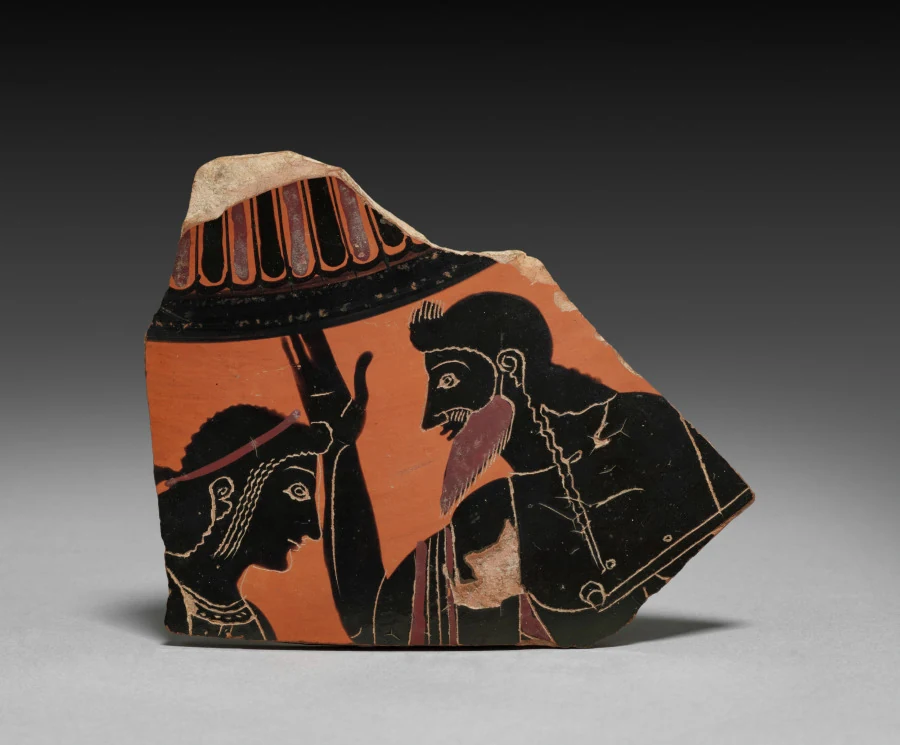
The useful detail comes after the fighting. The gods ask Zeus to rule, and he distributes honors among them. His brothers retain powers of their own. Think of Olympus as a family whose members can still quarrel over what each is owed. A thunderbolt settles some arguments. It cannot do the work of all those bargains.
What Odin pays for knowledge
In Snorri’s Gylfaginning, Odin wants a drink from Mimir’s well. The price is one of his eyes. A king trading part of his sight for better understanding makes a strange counterpart to Zeus, whose most familiar attribute lets him strike from a distance. Odin travels, questions strangers and sends out ravens. Being king gives him good reasons to seek information; it does not mean he already has it.
His warriors train in Valhalla because he knows a reckoning is coming. When Fenrir breaks loose at Ragnarök, the wolf swallows him. Odin’s son Vidar kills the wolf afterward. A son can avenge his father here without reversing what happened to him.
Which Norse god actually throws the thunder?
Thor. That’s why a chart matching Zeus to a single Norse equivalent will give two different answers depending on the column. Match the gods by rank and Zeus sits beside Odin. Match the sound of a storm or the weapon in a god’s hand and Thor makes more sense. Odin carries a spear; Thor carries the hammer Mjölnir.
Read the prophecies side by side
In Hesiod, Zeus hears that Metis could bear a son who would become king. He swallows her while she is pregnant with Athena. The poem leaves Zeus on the throne, but there’s an uncomfortable resemblance to Cronus in the way he stays there. Odin’s preparations have the opposite shape. Knowing how his reign ends makes him busier, not safer. That difference survives almost any change of costume in a comic or a game.
Can the king save his own child?
The Iliad gives Zeus a smaller and more painful decision than the fate of a kingdom. His son Sarpedon is about to die at Troy. Zeus considers carrying him away alive. Hera points out what would happen if every god with a child on the battlefield claimed the same privilege. Zeus lets the fight proceed. There is blood in the rain that falls for Sarpedon.
Homer makes room for a father’s grief inside the story of a king who could intervene. Read that scene alongside Odin’s preparations for Ragnarök. The interesting question is no longer which god has the larger arsenal. It’s what each can still do after learning someone he loves will die.