Athena vs. Minerva: Why the Goddess of Wisdom Carries a Spear
Odysseus finally gets home, meets a stranger on the shore of Ithaca, and lies about who he is. The stranger is Athena in disguise. She could expose him on the spot. Instead she smiles. After years apart, she has caught her favorite mortal doing exactly the thing she likes about him.
Athena is the Greek goddess Romans identified with Minerva. Both are associated with skilled work, intelligence and war. A helmet helps you recognize their pictures. Their stories answer a more interesting question about wisdom: what can a person actually do with it?
Athena helps Odysseus plan a homecoming
Book 13 of the Odyssey gives Athena a problem deserving of her attention. Odysseus is home, but he cannot just walk through his own door. Men who want to marry his wife are eating their way through his household. If he announces himself too early, his long journey could end a few steps from his bed.
The goddess and the man sit down by an olive tree to plan. She disguises him as a poor old stranger and directs him to his swineherd. Looking weak gives him time to learn who stayed loyal. The partnership works because Athena can give Odysseus a new face, and he can keep his nerve when people treat him as if it were his own.
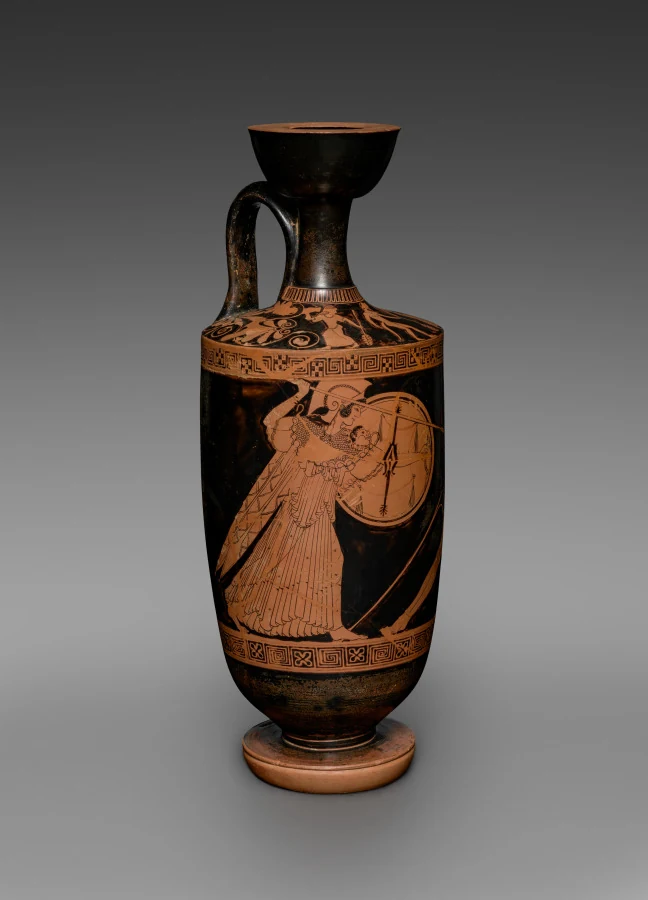
Minerva has a festival for people who make things
Ovid’s Roman calendar, the Fasti, gives Minerva a much busier appointment book. For her March festival, the Quinquatrus, he addresses children, teachers, shoemakers, doctors and people who clean stained clothes. Someone preparing wool needs her help just as much as someone carving a statue. Ovid even makes room for himself. A working poet has a claim on her attention too.
The poem gets unusually specific about weaving. A girl must learn to pass the shuttle across the upright threads, then beat the new thread into place. Minerva knows what can go wrong between one motion and the next. The same festival includes armed contests after its opening day. Roman readers could picture this goddess watching a loom or taking pleasure in drawn swords.
What Minerva weaves when Arachne challenges her
In Ovid’s Metamorphoses, the goddess hears about a mortal weaver whose admirers think Minerva must have taught her. Arachne refuses to give the goddess credit. Both women take a loom. Minerva weaves her contest with Neptune for Athens, complete with the olive tree that marked her victory. Arachne makes a cloth showing gods using disguises to deceive mortals.
The mortal has understood the assignment a little too well. Her weaving is technically faultless, and her subjects make the gods look terrible. Minerva tears it up. In the familiar ending Arachne becomes a spider, still able to spin. Notice the city at the center of Minerva’s own design. A Roman poet can call her Minerva and let her present her credentials as the patron of Athens, all inside one scene.
Which name belongs in the story you are reading?
For Homer’s Greek poem, Athena is the most transparent choice. In Ovid’s Latin retelling, Minerva tells you something about the author and his audience even when the action takes place on Greek soil. Both traditions also use Pallas. An older English translation may put Minerva on the shore at Ithaca because its translator preferred Roman names. Check the author before deciding that a different goddess has entered the scene.
More from the Myth Library
Frequently asked questions
Is Minerva the Roman version of Athena?+
Yes. Romans identified Minerva with Athena and retold her stories. Minerva also had a place in the Roman religious calendar, including the March festival called the Quinquatrus.
Is Arachne’s rival Athena or Minerva?+
In Ovid’s Latin Metamorphoses, the goddess is Minerva, also called Pallas. Retellings using Greek names generally call her Athena.